
No products in the cart.

Make Your Voice Heard on the Proposal for Freedom Plaza
 MHNA
As many of you know, New York State has authorized up to three downstate casino licenses as part of its broader economic development and entertainment strategy, with eight finalist applicants under consideration (learn more about them here).
One of the eight finalists is Freedom Plaza (https://freedomplaza.nyc), a major development project by Soloviev and Mohegan planned for the long-vacant site on First Avenue between 38th and 41st Streets. This proposal is among the largest our neighborhood has ever seen, with multiple components beyond the casino itself, and this represents the first serious proposal in a generation to reimagine this space.
As a community, it’s important that all residents are well-informed with all the publicly available information that has been shared by Freedom Plaza, understand what has been raised as the potential benefits and concerns, and details of how to get more informed and involved.
Information Provided by Freedom Plaza
Video Overview
Proposal Overview
1-Pager

In-Person Presentation with the Community Advisory Committee
Executive Summary of the Draft Environmental Impact Statement
You can see all the materials here: https://gaming.ny.gov/freedom-plaza-environmental-review-materials
History of Freedom Plaza
1900’s: Once an industrial area of slaughterhouses, coal yards, and freight depots, this site became home to New York Edison’s Waterside Station in 1901. Despite numerous technological upgrades over decades, the plant caused significant environmental damage to the enclave.
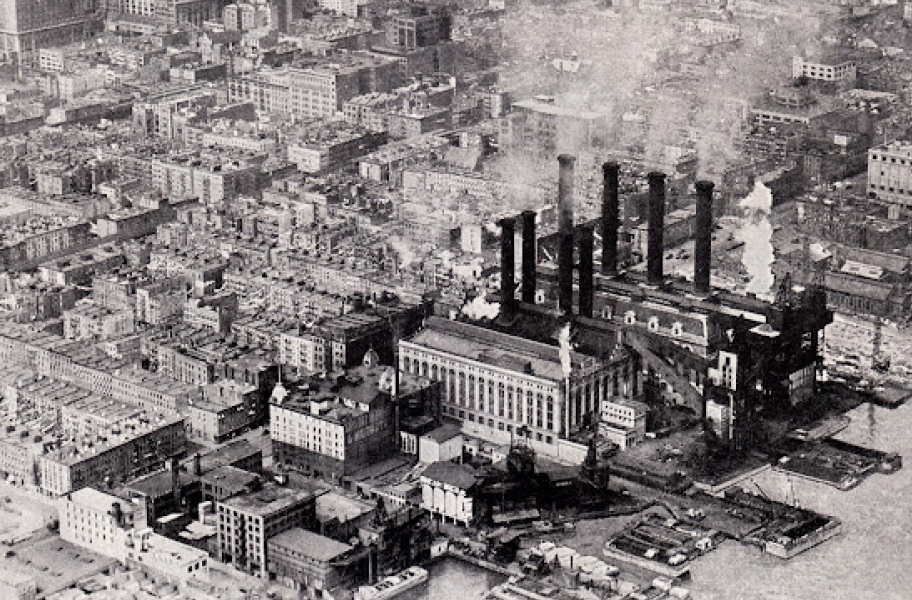
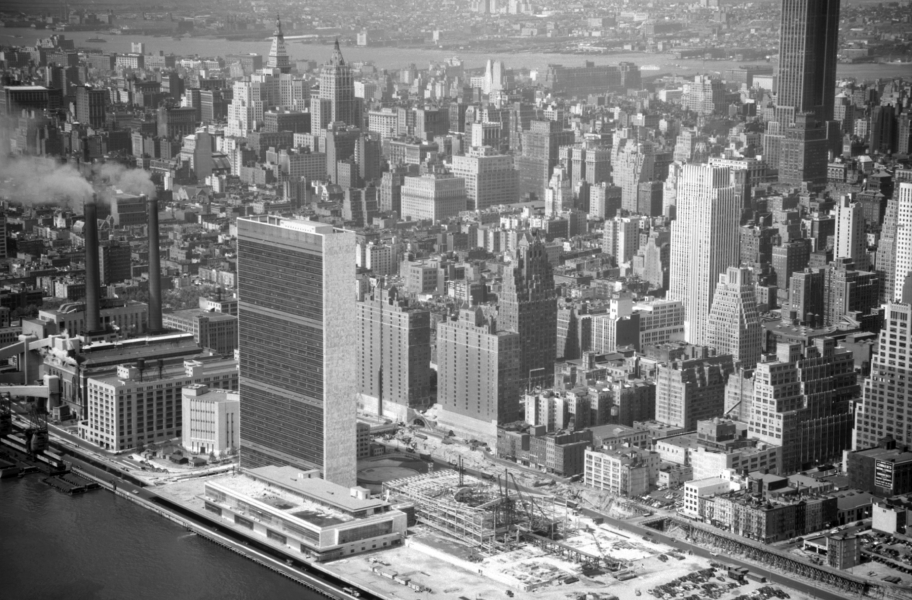
1950’s: In 1945, the aftermath of World War II brought the formation of the United Nations. With it came the need for a headquarters, and somewhere to build it. John Rockefeller Jr. purchased the east side parcel of land from real estate developer Wallace Zeckendorf, and donated it to the United Nations. A subsequent competition named two board members, Oscar Niemeyer and Le Corbusier, as designers of the project. The rise of the United Nations proved to be a turning point for the east side area.
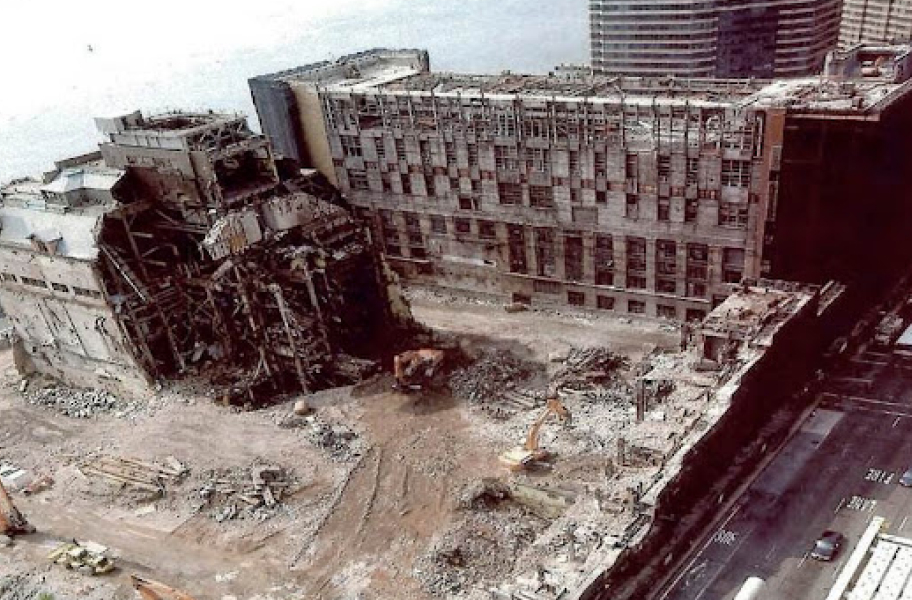
2000’s: The Beaux Arts-style power plant was decommissioned in 2005 by the now re-named Consolidated Edison. After a sale to the Soloviev Group in 2007, the structure was demolished, creating the vacant lot that remains today. A century of industrial use left the site significantly contaminated and the EPA identified it as a Brownfield, or a property compromised by presence of a hazardous substance, pollutant, or contaminant. In response, the Soloviev Group spent nearly $100 million cleansing the land of toxic materials.
Today: In the wake of the significant damage caused by Hurricane Sandy, New York City establishes climate resiliency and the protection of coastal sites from storm surge and future flooding events as a priority. With waterfront property recognized as one of the city’s greatest assets, a focus on creating a continuous and accessible waterfront park is renewed. The site is one of the few remaining sizable and undeveloped plots of land in Manhattan and currently features the Path of Liberty art installation.

Potential Benefits & Concerns
✅ Benefits
- Economic, Housing, Parks: $11B investment, 1,100 residential units (513 permanently affordable), 5-acre public park, 5-star luxury hotel & amenities, museum, dining, retail, daycare, and more, creating 8,000 permanent union jobs
- Community Fund: Supporting local priorities: schools, parks, nonprofits, and neighborhood improvements with a $5M annual fund, growing to $250M over 20 years *
- Safety: 24/7 private security patrol with NYPD coordination
⚠️ Concerns
- Casino Impacts: Concerns about introducing a casino to a residentially historic & family-oriented neighborhood impacting the character of the community with the added risk of gambling-related social costs
- Quality of Life: Increases in noise, nightlife, and tourism pressures throughout all hours of the day. Loss of East River views for some residents
- Traffic: Increases in traffic and congestion
* This could mean new resources for: a) neighborhood improvements: cleaner streets and beautification projects, b) community life: local events and cultural programs, c) youth & education: educational programs and after-school initiatives d) arts & culture: grants for creative projects, e) local businesses: support local stores and restaurants, f) safety & quality of life: added neighborhood patrols and resiliency efforts.
Next Steps & How to Get Involved
The proposal is in review by multiple levels of City and State, with opportunities for public input. Community voices will play an important role in shaping how this project moves forward and we encourage residents to attend the upcoming meetings:
DATE/TIME: Thursday, August 28, 2025, 3:30pm to 9:00pm
- Applicant Presentation to Committee Members (4:00pm-4:45pm)
- Public hearing (4:45pm-9:00pm)
DATE/TIME: Monday, September 15, 2025, from 2pm to 8pm
- Applicant Presentation to Committee Members (2pm)
- Public hearing (3pm-8pm)
LOCATION: Scandinavia House, 58 Park Ave (between 37th & 38th Streets), Borge Hall – Lower Level
LOGISTICS: Speakers must sign up in-person, and will be called to speak in order of sign-in. Remarks can be up to 2 minutes.
You can also email your comments
FreedomPlazaPublicComment@nystec.com
Or send written comments by mail
Freedom Plaza Community Advisory Committee c/o NYSTEC
Attn: CAC Consultant Team
540 Broadway, 3rd Floor
Albany, NY 12207
A New York State Community Advisory Committee (CAC) will determine whether the plan moves forward with four (of the CAC’s six) members needed to vote for the application. More details are found on the Casino License Awarding Process website: https://cbsix.org/resources/casino-license-awarding-process/.
Who Is Behind the Proposal
Soloviev (https://solovievgroup.com/): A multi-generational family company with major New York City properties such as the commercial building 9 West 57th Street and the residential building 685 First Avenue in Murray Hill. Through the Soloviev Foundation (https://solovievfoundation.org/), they have been active in philanthropy, environmental initiatives, and cultural programming, and supporting local initiatives and groups including Murray Hill Neighborhood Association and others.
Mohegan (https://www.mohegan.nsn.us/): The Mohegan Tribe of Connecticut owns and operates the resort Mohegan Sun (https://mohegansun.com/), as well as other hospitality properties across the U.S. and Canada. Their business culture is guided by the Spirit of Aquai, a philosophy that calls for infusing everyday life with the principles of cooperation, mutual respect, and shared responsibility.
Working Together as a Community
We know neighbors will have different opinions, as some see this project as an opportunity, while others have strong concerns. That diversity of views is part of what makes Murray Hill and New York City unique. Our city works best when we find ways to work together, even when we don’t all agree, to achieve outcomes that strengthen our community. The Murray Hill Neighborhood Association wants to ensure all residents are aware of all the information that we have, and regardless of the outcome, we remain committed to ensure that we work together to build a stronger, safer, and better neighborhood for all.


Comment (1)
Annie Lebeaux
Westbound traffic coming from FDR or the midtown tunnel would be logically funnelled to two adjoining streets— either E. 33rd or E. 35th. But E. 33rd would stop its glow at Park Ave. because it’s permanently blocked off by the Park Ave. Tunnel, which would leave E. 35 St., which, because of massive construction between Park & Madison projected to last at least till 2027, is closed down to 1 lane! It would be a honking,, frustrating mess! 34th St. traffic is not that bad, and when I take the westbound bus it gets across town within 10 minutes. This proposed busway smells like a candidate’s boondoggle to us!